

Japanese Knotweed Mortgages
Clear, practical mortgage advice when Japanese knotweed is involved.
- Last updated:
- No credit score impact
- No judgement
- Trusted Experts
Can you get a mortgage with Japanese knotweed?
Can you get a mortgage with Japanese knotweed?
Yes — Japanese knotweed doesn't automatically prevent you from getting a mortgage.
What matters is the level of risk, how close it is to the property, and whether it's being managed properly. Some lenders decline automatically, while others will consider the property once the right safeguards are in place.
This is where experience matters. We know how survey comments, treatment plans, and guarantees are reviewed by lenders and valuers, and we prepare applications with those realities in mind.

Trusted When Your Mortgage
Really Matters
- £ 2.2 billion
- Total borrowing arranged
- 13,310+
- Mortgages approved
Find your options
Join thousands who've trusted us with their mortgage

Why Us
Knotweed mortgage specialists
We deal with Japanese knotweed cases regularly and understand how lenders interpret survey reports.
Beyond standard criteria
Advice shaped around real-world circumstances, not tick-box lending.
No upfront fees. No obligation
You won't pay to explore your options, and you'll speak to a real person who understands complex situations.
Mortgages & Japanese knotweed -
what you need to know

What is Japanese knotweed?
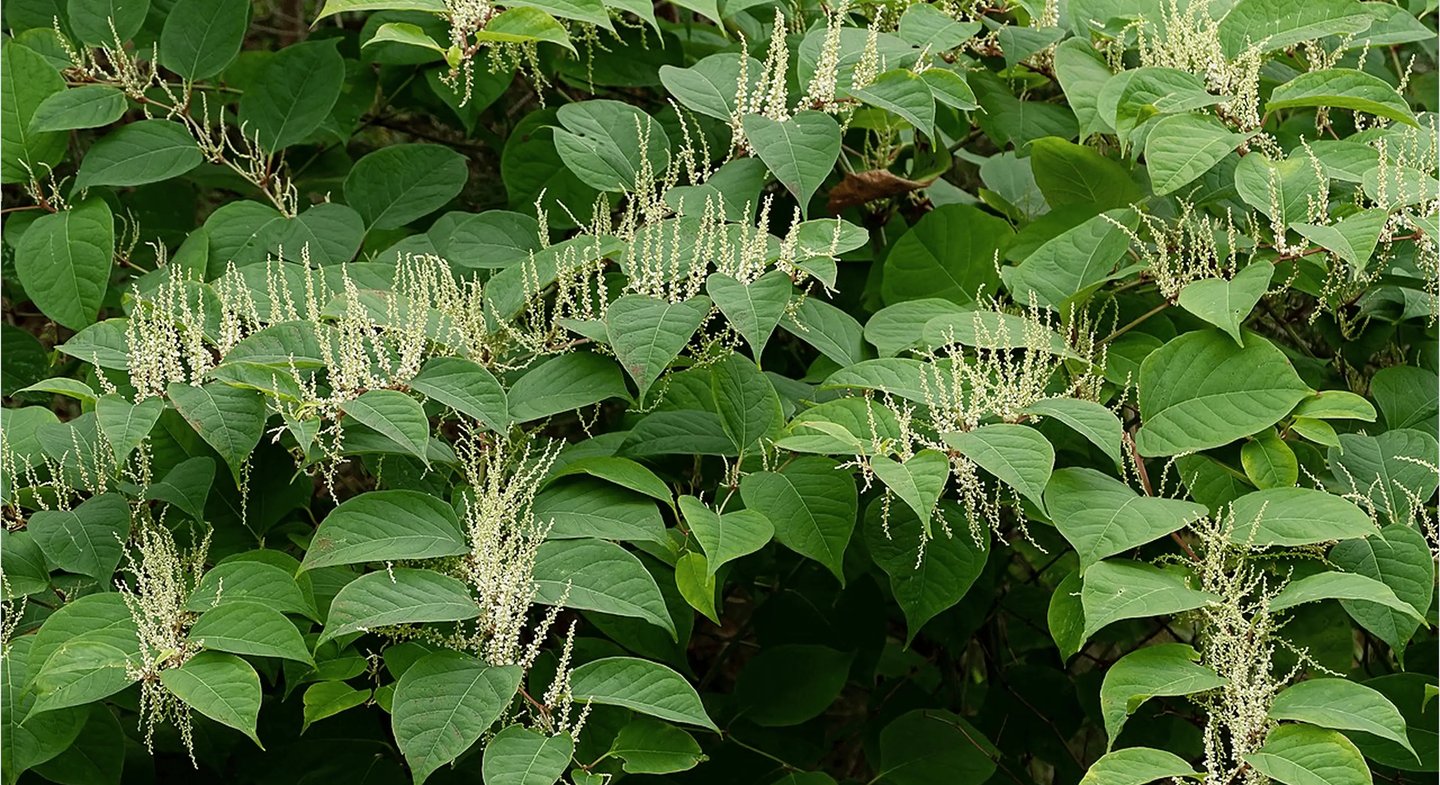
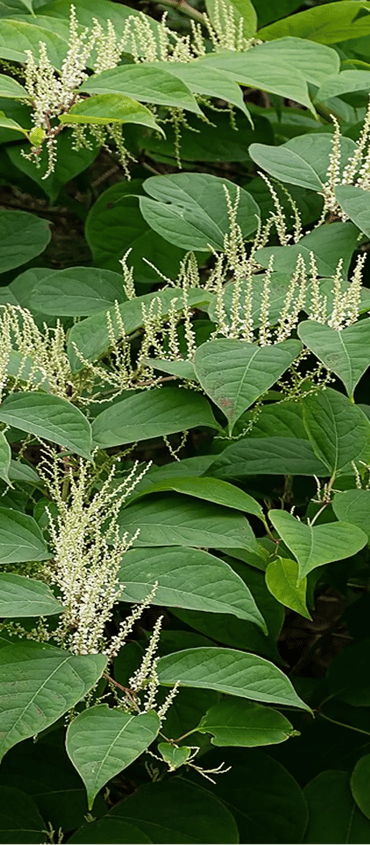
Japanese knotweed (Fallopia japonica) is an invasive plant that spreads quickly and is difficult to remove without professional treatment.
It was introduced to the UK in the 19th century and has no natural predators here, which allows it to grow and spread aggressively if left unmanaged. Because of this, surveyors and lenders take it seriously when it's identified near a property.
The presence of Japanese knotweed doesn't mean a property is unsafe or unmortgageable. However, its potential impact on structures, drainage, and future saleability means it needs to be properly assessed and managed.
In most cases, the focus is not simply on whether knotweed exists, but on how it's being controlled and whether there is a clear, professional management plan in place.
Why might Japanese knotweed affect your chances of getting a mortgage?
Lenders are cautious because Japanese knotweed can affect:
- Property value
- Structural integrity
- Future saleability
If a lender had to repossess, they need to know the property could be sold without difficulty. Knotweed introduces uncertainty, which some lenders prefer to avoid entirely.
Others are comfortable lending once the risk is clearly managed.
How Do Lenders Assess the Risk of Japanese Knotweed to a Property?
Lenders look at several specific factors when assessing knotweed risk:
- Distance from the property. The critical measurement is how far the knotweed is from the property structure and boundaries. The 7-metre rule is widely used - knotweed within 7 metres is considered high risk, beyond 7 metres is much lower risk. Some lenders are more cautious and use 10 metres.
- Treatment status. Has the knotweed been treated? Is treatment ongoing? Is there a professional treatment plan in place? Lenders distinguish between active untreated knotweed (high risk) and knotweed under professional management (lower risk).
- Insurance-backed guarantees. Most lenders who accept treated knotweed properties insist on an insurance-backed guarantee from a PCA-registered company. This typically needs to be at least 10 years and transferable to future owners. The guarantee provides the lender with confidence that if knotweed returns, there's insurance to cover re-treatment.
- Treatment company credentials. Lenders want to see treatment by Property Care Association (PCA) registered specialists, not DIY treatment or work by unregistered companies. PCA registration means the company meets industry standards and can provide guarantees lenders trust.
- Location - your property or neighbouring. Knotweed on your own land is treated more seriously than knotweed on neighbouring land, even at the same distance. Lenders want evidence that knotweed on neighbouring land is being managed and won't spread.
- Survey report details. How the knotweed is described in the surveyor's report matters. "Japanese knotweed identified within 7 metres" might trigger an automatic decline with some lenders. "Japanese knotweed previously treated, no evidence of recurrence" is assessed very differently.
Different lenders weigh these factors differently. Some are inflexible on the 7-metre rule. Others will consider properties within 7 metres if there's strong treatment evidence. This is why lender selection is critical for knotweed-affected properties.
Speak to a knotweed mortgage specialist today
See whether a mortgage is possible and compare your available options.

Common Japanese knotweed mortgage questions
Speak to a Real
Mortgage Expert
Mortgages are complex. The best way to understand your options is to speak to an expert—and we're here to help.
- Real People, Real Help
- No Pressure, Just Advice
- Fast & Accurate
There are no upfront fees and no obligation!
- Monday - Friday
- 8am - 9pm
- Saturday
- 9am - 5pm
- Sunday
- Closed
Meet Some of Our Mortgage Specialists
Real people ready to help you find the right mortgage
Liz Cunningham
First time buyer & remortgages specialist
Michael Budzak
Complex mortgages specialist
Ava Conroy
Complex mortgages specialist
Examples from our wider team of mortgage specialists
You don't need to choose — we'll connect you with the right adviser